
Castaway Cove Vero Beach Homes: Is This Community Right?
Wondering whether Castaway Cove is the right fit for your next move? If you are drawn to barrier-island living in Vero Beach, this community can check some very specific boxes, but it is not a one-size-fits-all option. Understanding how the waves work, what access rights come with a property, and what day-to-day ownership looks like can help you make a smarter decision. Let’s dive in.
Castaway Cove is a private, gated barrier-island neighborhood set between the Atlantic Ocean and the Indian River Lagoon. The community was originally planned with an emphasis on preserving its natural setting, including live oaks and the coastal environment.
One of the most important things to know is that Castaway Cove is not a single uniform HOA. It is organized into separate wave associations, including Wave II, Wave III, Wave IV/V, and Wave VI in public HOA directories. That means the specific wave matters when you are comparing homes, dues, rules, and access rights.
For buyers looking at Castaway Cove Wave One, that detail is especially important. You will want to confirm exactly what is tied to the lot you are considering rather than assuming every home in the broader Castaway Cove area offers the same ownership benefits.
Castaway Cove is best understood as an access-oriented neighborhood. The appeal is less about resort amenities and more about the convenience of living in a gated coastal setting with proximity to both the ocean and the lagoon.
Official community materials for Wave II state that beach access is deeded through the Wave I plat and includes a five-foot boardwalk from Crescent Beach Road to the Atlantic Ocean. Those same materials note access to both the beach and the river, with river access points at Bounty Boulevard and Winding River.
For you as a buyer, the big takeaway is simple: access should always be verified property by property. In a community where recorded rights and wave structure matter, careful review is part of smart due diligence.
Castaway Cove tends to appeal to buyers who want a quieter coastal lifestyle with a strong neighborhood feel. Public neighborhood descriptions point to a setting that works for both full-time residents and seasonal owners, with private beach access and a gated seaside atmosphere.
If your ideal day includes regular beach walks, easy water access, and a residential environment rather than a club-centered one, Castaway Cove may feel like a strong match. It can be especially appealing if you want Vero Beach barrier-island living without making golf, racquets, or formal club membership the center of your decision.
This can also be a practical option for relocation buyers who want a more settled residential setting. If you are moving from out of state or comparing several coastal neighborhoods, Castaway Cove offers a lifestyle that is defined more by location and access than by a long list of built-in amenities.
Every neighborhood has tradeoffs, and Castaway Cove is no exception. Here, one of the clearest tradeoffs is structure.
The official rental packet requires leases of at least three months, HOA approval before a lease begins, and a $100 processing fee for each lease. Short-term leases are not allowed.
Homeowner rules also require ARC approval for improvements and include regulations covering construction hours, pets, parking, and outdoor storage. If you prefer a neighborhood with more oversight and consistency, that may feel reassuring. If you want maximum flexibility, this may feel restrictive.
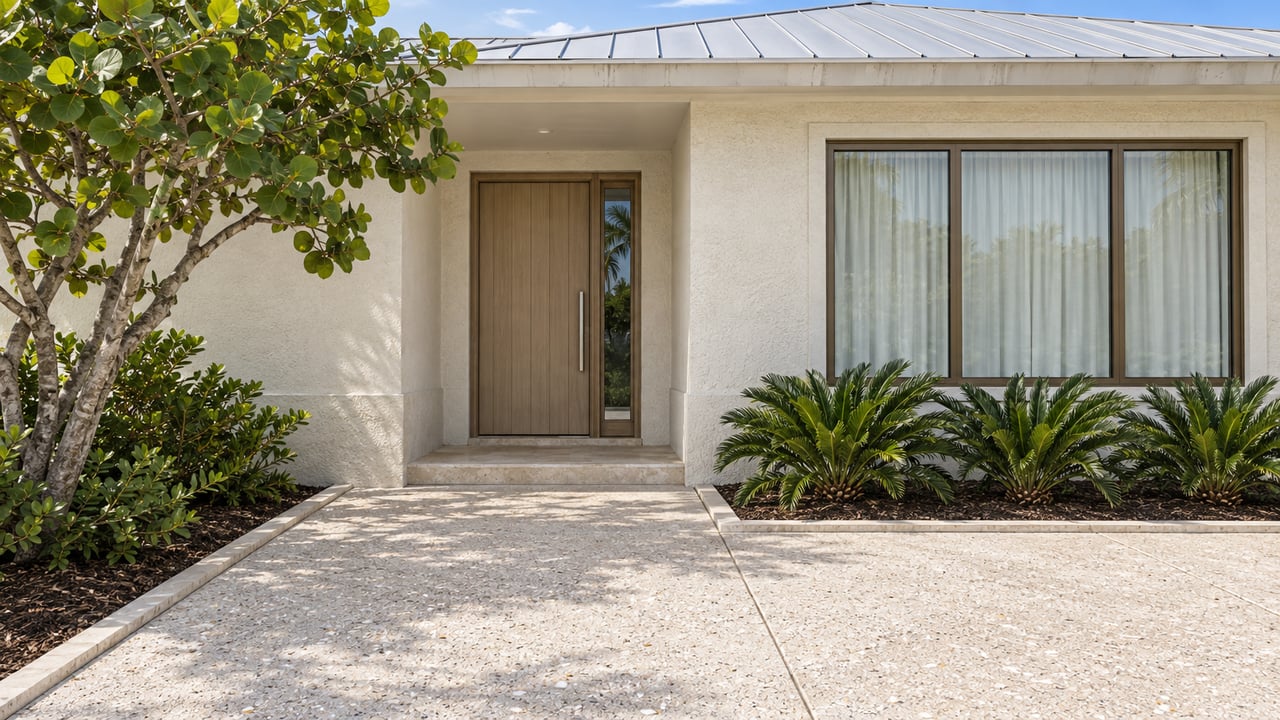
Castaway Cove is made up mostly of single-family homes, but the housing stock varies by wave. Public neighborhood pages describe Wave I as having 54 single-family homes built between 1979 and 1996, generally ranging from about 1,800 to 4,000 square feet.
Across the broader community, Wave II is described as 78 single-family homes built between 1983 and 1988, while Wave III includes 87 single-family homes built between 1981 and 1989. Wave IV is a larger mix of 63 residences built between 1983 and 2016, Wave V is a smaller single-family enclave, and Wave VI includes both older and newer construction through 2022.
That variety means your experience can differ a lot depending on the section you choose. In practical terms, Castaway Cove can offer everything from more traditional Florida homes to newer coastal designs, but the details depend on the exact property and wave.
When you budget for Castaway Cove, it helps to think beyond the purchase price. HOA dues can vary meaningfully by wave and by property.
Current listing examples show monthly HOA amounts such as $83.33 in Wave I, $100 in Wave II, $200 in Wave III, and $197 in Wave V. These figures are best treated as examples rather than a universal fee schedule, but they do show that monthly costs are not identical across the community.
A realistic ownership budget should also include county property taxes, homeowners insurance, wind coverage, and likely flood insurance. For buyers considering this part of the barrier island, insurance is not a side issue. It is a core part of the ownership picture.
Barrier-island living comes with real coastal exposure. Indian River County planning documents note the barrier island’s low-lying configuration and exposure to shoreline erosion, storm surge, and evacuation concerns.
That does not mean you should avoid the area. It means you should go in with clear expectations and a well-prepared budget. If you are comparing Castaway Cove with inland neighborhoods, insurance and weather-related planning should be part of your side-by-side review.
For second-home buyers in particular, this step is easy to underestimate. A home that feels perfect on a showing day still needs to make sense when you factor in year-round carrying costs.
If you plan to make your home in Castaway Cove your primary residence, tax treatment may differ from a second-home purchase. The Indian River County Property Appraiser states that permanent Florida residency is required on January 1, and homestead exemption applications are due by March 1.
That means second-home buyers should not assume they will receive homestead treatment. If tax planning is part of your decision, it is worth reviewing your intended use of the property early in the process.
This is another reason local guidance matters. Small details can affect your long-term ownership costs more than many buyers expect.
If you are touring Vero Beach barrier-island communities, Castaway Cove is often easiest to understand by comparison. It offers a different experience from club-driven neighborhoods.
Compared with The Moorings, which centers on golf, racquets, boating, dining, and private club membership, Castaway Cove is more of a residential HOA community built around beach and river access. Compared with John’s Island, which is also built around an extensive private club structure, Castaway Cove is generally the less club-intensive and more neighborhood-driven option.
Compared with the broader town setting of Indian River Shores, Castaway Cove stands out for its wave-based HOA structure and recorded access rights. If your top priorities are deeded beach access, lagoon access, a gated setting, and a quieter residential feel, Castaway Cove deserves a close look.
Before you move forward in Castaway Cove Wave One or any other wave, make sure you get clear answers to a few practical questions:
These questions can help you separate a beautiful home from the right long-term fit. In a community with meaningful variation from one wave to another, details matter.
Castaway Cove may be the right ocean-to-river community for you if you want a gated barrier-island neighborhood with a quieter feel, single-family homes, and access that supports an easy coastal lifestyle. It is especially compelling if you value beach time, river access, and a residential setting more than a club-focused social calendar.
It may be less ideal if your priorities include short-term rental flexibility, very light HOA oversight, or a long menu of resort-style amenities. The best fit comes down to how you live, how you plan to use the property, and how comfortable you are with the structure that comes with this kind of coastal community.
If you want help comparing Castaway Cove with other Vero Beach barrier-island neighborhoods, working with a local advisor can make the process much clearer. For thoughtful guidance on buying, selling, relocating, or narrowing down the right coastal community, connect with Livia Sorger.


Work with an agent who respects your time, budget, and goals. Confidence comes standard. Experience organized, responsive, and budget-focused representation. Every detail handled with care.
Livia Sorger
ADDRESS 1006 Beachland Blvd Vero Beach FL 32963